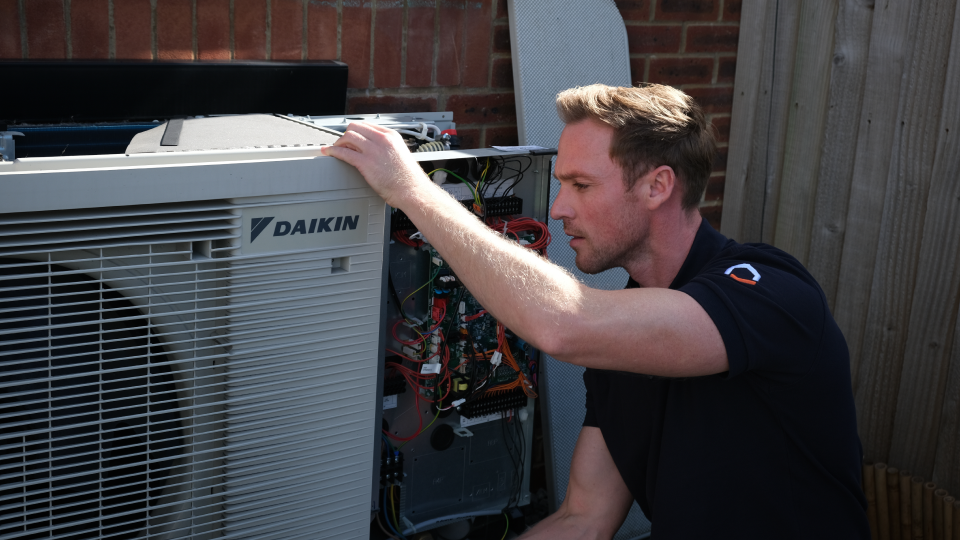



An air-source heat pump is a great way to control the temperature in your home all year round – they’re effective, energy-efficient, and eco-friendly too. However, it’s only useful as long as it’s in good working condition. That means whether you’re weighing up getting one for your own home, or you’re thinking about changing some arrangements with your existing system, one of the biggest decisions you’ll need to make will centre around how to keep your air source heat pump in perfect working order all year round.
There are two main options to choose from: a heat pump service plan, or pay-as-you-go. As with so many of these decisions, the cost of each one is likely to be a major deciding factor. So with that in mind, our experts at ServiceMy have created a short guide with all the key information you’ll need, so you can make an informed decision about which one best suits you.
What’s the difference between a heat pump service plan and pay-as-you-go?
Pay-as-you-go
IIf you decide to pay-as-you-go, then that means you’ll be arranging a service visit or repairs only when your system needs attention. In a nutshell, you’ll contact a service provider when you spot an issue, or when you want a routine check, and then you’ll be charged a one-off fee for that specific visit or repair. Under this arrangement, each job is priced individually, so the amount you’ll end up spending will be strongly influenced by how often your system needs maintenance, and how complex each issue is.
One of the main reasons that people often choose this approach is because it can give you a lot of flexibility over when you choose to schedule the work, and how you manage your budget. Since the costs are so closely tied to your actual usage, it can provide a feeling of greater control over exactly when and how you invest in your system’s upkeep.
Service plan
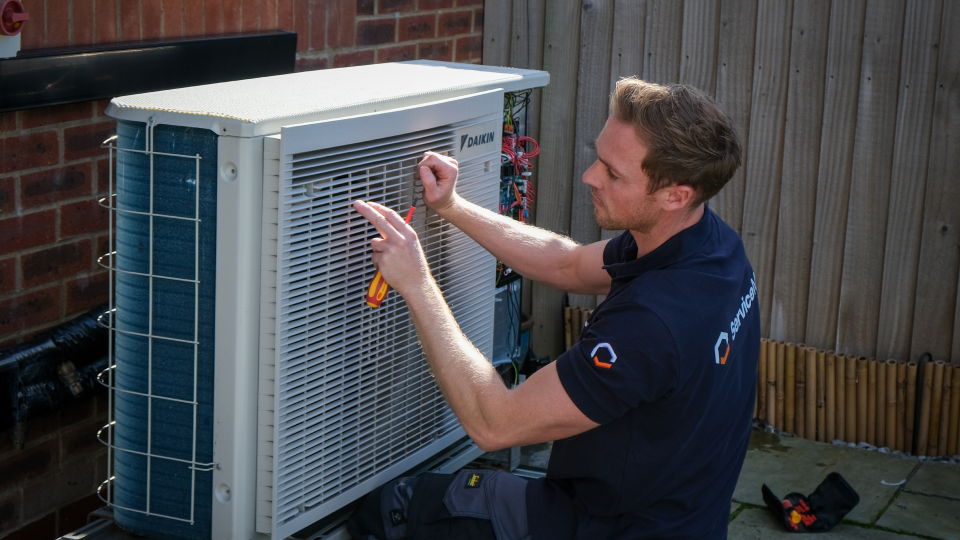
If you decide to go down the service plan route, you’ll pay a fixed monthly or annual fee, and in return you’ll get a planned maintenance schedule that runs throughout the entire year. Engineer visits will be pre-arranged as part of this service plan, as opposed to the ad-hoc visits associated with the pay-as-you-go alternative. This way, your air source heat pump will get the benefit of consistent, regular attention throughout the year – especially during those crucial transitions to and from the harsher seasons.
During each on-site visit, the engineer will check the system’s performance levels, clean its internal components, test the system controls, and look for any signs of wear that could later start to affect how well the heat pump functions. The specifics of each plan can vary depending on the provider, but lots of them also include priority booking, defined response times, and controlled repair pricing.
How much does it cost to pay as you go?
There’s no one-size-fits-all answer to this question, as the answer depends heavily on exactly which repairs are being carried out. Some repairs are more expensive than others, and almost all of them are in at least the three-figure range. It’s also worth bearing in mind that you may need to have more than one repair done in a single visit.
Here’s a quick breakdown of roughly what to expect for the most common jobs:
| Nature of repair | How much does it cost? | Additional details |
| Annual service | £150 to £300 | Estimates according to Checkatrade. The exact amount varies depending on size, location, and engineer rates |
| Diagnostic call-out | £90 to £150 | This cost applies before any repair work is carried out |
| Refrigerant top-up (if required) | £200 – £450 | Requires F-Gas certification. Leak detection may be extra. |
| Fan motor replacement | £300 to £600 | Common after 5 to 8 years of use. |
| Expansion vessel | £150 to £300 | A frequent failure point in older systems. |
| Compressor replacement | £1,200 to £2,500 | This is a rare job, but it’s also the most expensive single repair; often covered by service plans |
| Out-of-hours surcharge | 50% to 100% premium | Applied to weekend and evening call-outs, where breakdowns often happen |
What’s important to know beforehand?
Some of the costs above can be fairly manageable individually, and on a year-to-year basis, it can potentially end up being the more cost-effective option. But this is essentially a gamble – while it can stave off maintenance costs in the short term, there’s a chance that if something goes wrong later on, it can be especially expensive to fix.
Plus, it’s worth bearing in mind that all air source heat pumps will need maintenance eventually, as many of their components have a finite lifespan. In other words, certain issues are inevitable – and if two or more fall within the same rough timespan, the costs can start to mount up quickly. That doesn’t make pay-as-you-go a non-starter, but it does mean it’s a good idea to carefully weigh up the possible costs against the possible savings, so you can make an informed decision about how likely the former could potentially wipe out the latter.
How much does a service plan cost?
A service plan in the UK typically costs between £10 and £25 a month for an air source heat pump system (according to Checkatrade), depending on the provider and the level of cover. This works out to roughly £120 to £240 a year.
However, there are also heat pump maintenance contracts that run to higher price-points – often because they provide a deeper and more personalised level of service, or absorb more of the standard costs associated with air source heat pump repairs (such as callout charges).
As a general rule of thumb, most service plans tend to cover the following as standard:
| Nature of repair | Estimated savings (compared to pay-as-you-go) |
| Annual service | £150 to £300 |
| Priority call-out booking | [not applicable] |
| Diagnostic visits | £75 to £150 per visit |
| Labour on repairs | £60 to £120 per hour |
| Generous parts allowance (up to a cap) | £100 to £500 typical allowance (depending on plan) |
There are also a few things that a heat pump service plan may NOT include as standard:
- Major component replacements, such as compressors
- Pre-existing faults at the point of signup
- Issues outside of the heat pump itself, such as radiators or underfloor heating
- Electrical faults that affect the wider property
- Third-party system integrations and controls
Even if you’re reasonably confident about what your service plan contains, it’s still always a good idea to carefully review the terms before you commit, so you can avoid any unwelcome surprises later on. While service plans tend to involve higher up-front costs, it makes it easier for engineers to catch developing issues before they become serious problems, so that they’re more straightforward (and therefore cheaper) to fix.
Choose the plan that best suits you
Find out more about the various air source heat pump service plans we offer here at ServiceMy – including all the different options we provide – and discover how much you could save.
What to look for before committing to a plan
When you come to make your decisions between different service plans, two of your biggest considerations will probably be to do with lifetime cost, as well as how well they match your schedule, or the requirements of your individual system. In addition to those key factors though, there are a few more crucial factors that it’s worth taking into account before you commit to a plan.
The exact list of parts that are covered and excluded
This is what really determines exactly how useful a given service plan is going to be to you, so it’s worth making sure you’re clear on exactly which components are included, and which ones fall outside of the agreement. Small misunderstandings here can potentially lead to significant costs later on, especially if they relate to parts that commonly wear out over long periods, so make sure to take your time.
Parts and labour call-out cost cap
Some plans place a limit on how much they’ll contribute towards parts and labour in a single visit, which can have a direct impact on how the repairs are then handled. If an individual repair hits that cost-cap, the engineer will generally stop the work, and either reschedule it for another visit, or charge for it as an additional cost. Both options aren’t great, as either it can leave part of your issue unresolved in the meantime, or else end up costing more than you’d initially budgeted for.
Response times and service availability
The speed at which an engineer can attend, and the availability of appointments, will both have a direct impact on how long your system runs with a fault. Plans that clearly define their response times and offer accessible booking options generally make it easier to get issues resolved quickly, which can save you a lot of hassle in the short and long term.
Minimum contract length and exit terms
The length of the contract affects how much flexibility you have once you’ve signed up, so it’s important to understand how long you’re committing for and what happens if your situation changes. Longer agreements can keep you locked in for extended periods, so it’s a good idea to review the exit terms carefully.
When it comes to cost, it’s best to think long-term
When it comes right down to it, the choice between a service plan and pay-as-you-go basically comes down to the age-old decision between reactive repairs and preventative maintenance. Reactive repair is often cheaper in the short-term, but it can occasionally be quite expensive – so the main question is whether those gradual savings will outweigh the occasional higher costs.
For the same reasons, a service plan is generally the cheapest option over a typical ownership lifetime. As we touched on above, the regular visits make it easier for engineers to catch developing issues before they develop into more serious (and expensive) problems. So for most ASHP owners, beyond the first few warranty years, service plans provide lower lifetime costs, as well as better peace of mind against large combined repair bills.
That’s exactly where we can help at ServiceMy. We provide transparent heat pump service plans and one-off bookings across the UK, so you’ve got plenty of freedom to choose the best option to suit you. If you ever need any help or advice, our team is only a phone call away on 0333 050 2091 – we’re always here to help.