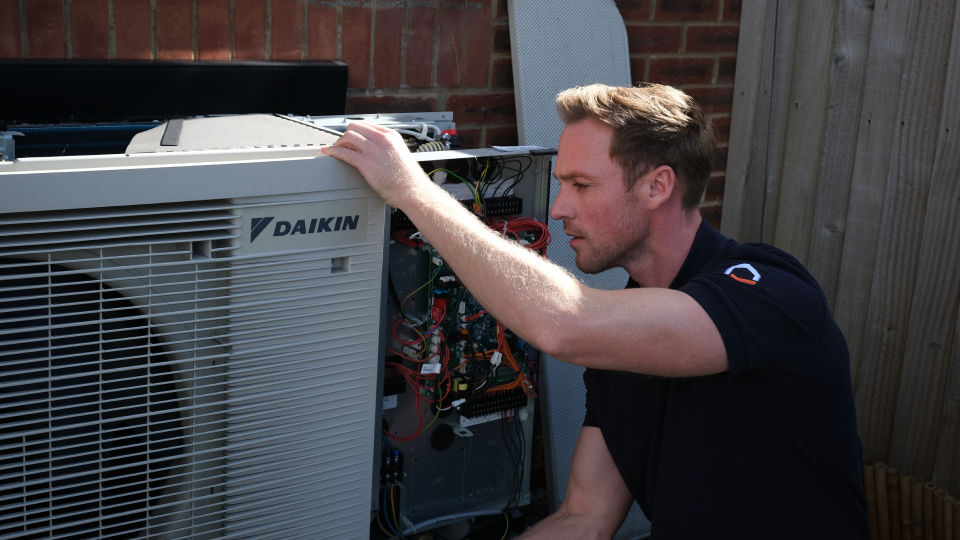



Heat pumps aren’t exactly what you’d call silent. They make lots of noises during the course of their normal operation, and most of these are roughly what you’d expect – clicking, buzzing, low humming – and just because a noise is unfamiliar, that doesn’t necessarily make it a cause for concern.
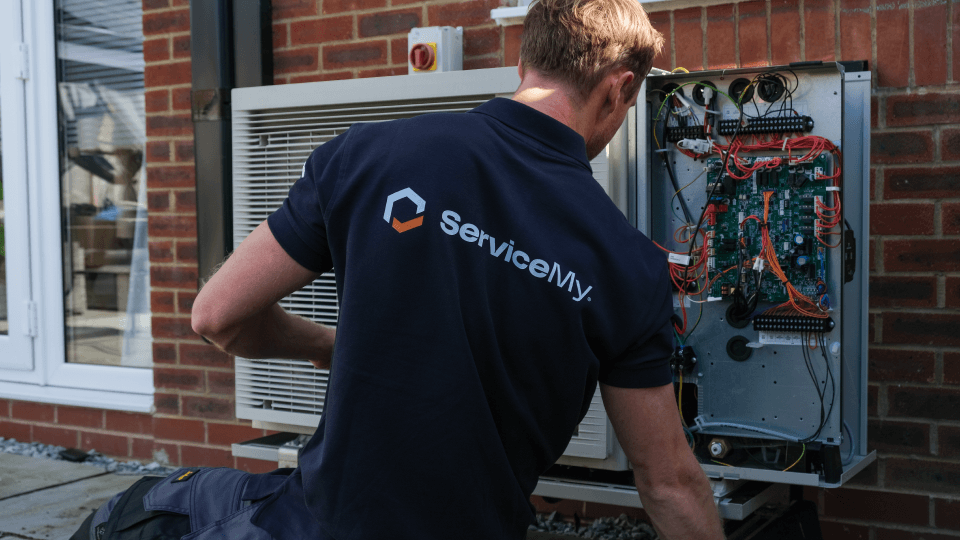
Now, with some sounds, it’s fairly obvious what they mean – you might not be a professional engineer, but machinery tends to make some pretty universal noises if it’s in distress. Grinding, squealing or shrieking are all good examples of sounds your heat pump definitely shouldn’t be making under any circumstances.
Here’s the tricky bit though – with everything else, how do you tell the difference between the sound of normal operation, and a sound that tells you to call an engineer? So, to put your mind at ease, let’s go through some of the most common noises that these air source heat pumps commonly make, and whether they’re a cause for concern.
What does a healthy heat pump sound like?
As we’ve just touched on above, your heat pump is in constant operation, so it’s going to produce some level of sound all the time. (To be honest, if it’s making no sound whatsoever, you may well have bigger problems.) Most of the these are what you’d expect from a machine in constant operation:
- A gentle humming sound – this usually comes from the compressor and circulating pumps as your heat pump moves refrigerant and water through the system.
- A steady fan noise – the outdoor fan pulls air through the unit to transfer heat, so a consistent airflow sound is completely normal.
- Light clicking when turning on or off – the internal relays and controls will create small clicking noises as the system cycles between different operating modes.
- A soft whooshing sound – you may hear air or water moving through the pipework and internal components while the system adjusts its temperature levels.
- Occasional gurgling or trickling – small amounts of refrigerant or water moving through the system can create brief liquid-flow sounds, particularly during startup.
Some of these noises will be audible from time to time, but as a general rule, if there are any noises that sound especially loud, frequent or persistent (or both), that’s when they might start to indicate a problem. Now, let’s take a closer look at each one.
Why is my heat pump buzzing or humming loudly?
This is the first question that lots of people have about their heat pumps, and the one that our team are frequently asked about here at ServiceMy. As we’ve covered above, a low hum is normal. If it’s evolved into a louder or more persistent buzz however, that can be a sign of several potential issues.
It may be something electrical, such as problems with the electrical relay or contactors. These respectively affect the opening and closing of certain circuits, and high-power components like the compressor or fan motor, so they can start interfering with normal operation pretty quickly. The compressor itself may also be under strain for some reason, possibly due to a blockage in its circulation system.
Not all potential issues are electrical – they might be physical instead, such as the sounds of vibration caused by a loose panel or cover. It may even be the sound of the entire unit vibrating against its mounting surface, which could indicate that its connections have started to loosen, or that it’s being unbalanced by an internal component – possibly the fan motor.
Why is my heat pump clicking when it starts or stops?
On its own, clicking is generally nothing to worry about when it comes to heat pumps. It’s the main sound made by the relays and contactors switching, which is normal. However, if you notice that your heat pump is making particularly loud clicking sounds, or doing so rapidly in a very short space of time, that can point to several potential issues. This can include a failing capacitor, a relay cycling on and off, or a fault with the control board, all of which will need professional attention. Like many of the sounds we’re covering here, it’s even easier to detect if it’s happening together with another unsettling noise, like a loud humming.
Why is my heat pump making gurgling or whooshing sounds?
Gurgling or whooshing fall into the category of general refrigerant flow noises. You may often hear them just after the system starts up, or when it’s defrosting itself, which is normal. However, if those noises rise to the level that they’re noticeably loud, that could well indicate that there’s air trapped in the system somewhere, or that there’s something blocking the circulation.
These kinds of noises could also indicate a “low refrigerant charge”, which is basically the technical way of saying that your system doesn’t have enough of it. In case you’re wondering, refilling is something that you’ll need a professional to do, partially because the fluid itself is so tightly regulated in the UK.
Why is my heat pump making a grinding or scraping sound?
Now, you’re probably thinking “there’s no way this kind of noise could be part of normal operation”, and you’d be absolutely correct. Grinding, scraping or screeching noises are almost always signs of some mechanical problem. This can include worn fan bearings, a fan blade catching on its housing or ice build-up, or a failing motor.
Mechanical issues like these are obviously not problems that solve themselves, and they’re definitely not situations you’ll be able to resolve yourself either. If you hear any of them, then make sure to waste no time in calling an engineer. Try and do what you can to lessen the strain on your heat pump in the meantime – you may be able to turn it off using its main controller or thermostat.
If you can’t see an easy or safe way to do that though, don’t start fiddling with isolator switches and definitely don’t start opening panels or start accessing any wiring, as this can be incredibly dangerous. Just leave it for an engineer!
How can regular servicing help to prevent unusual heat pump noises?
For most of the unusual noises that we’ve covered here, it’s rare for them to suddenly appear overnight. Instead, it’s more common for them to start as smaller issues that can get gradually worse over time, until they become more complex and expensive to fix.
If that already sounds like a familiar situation, it’s worth considering whether preventative maintenance might be a better option for you than pay-as-you-go. During a routine annual service, an engineer can identify these early signs of wear and tear before they develop into larger mechanical or electrical faults, which can save you a lot of time, hassle and money. This also helps to extend the lifespan of key components like the compressor and fan motor, which are often the source of the loudest and most concerning sounds.
So, if you’ve noticed a strange noise from your heat pump, that’s exactly where we can help at ServiceMy. We specialise in servicing, maintaining and repairing air source heat pumps, and every one of our engineers is committed to providing a first-class service – whether you’re looking for transparent heat pump service plans or one-off bookings. Plus, if you ever need any help or advice, our team is only a phone call away on 0333 050 2091. We’re always here to help!