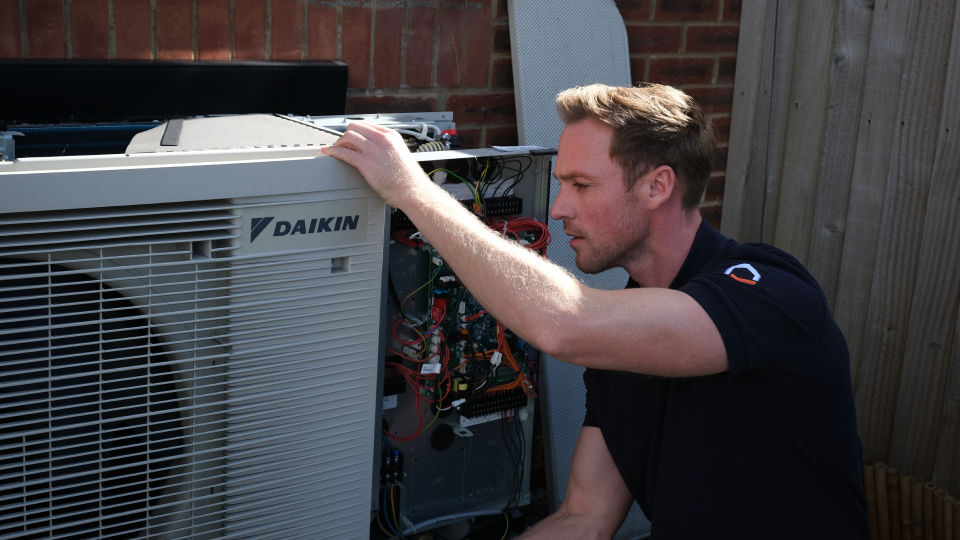



With awareness of environmental issues growing, and the government’s plans to phase out traditional gas boilers, it’s easy to see why so many homeowners are choosing to install air source heat pumps.
Heat pumps are widely recognised as an excellent way to boost the eco credentials of a home. Beyond being better for the environment, installing a heat pump can also bring significant energy savings while keeping your home comfortably warm.
There are certainly many advantages to installing an air source heat pump at home. But many people mistakenly think that having a heat pump installed on their property is the end of the story and that no further effort is required.
To gain all the benefits of having a heat pump at home, you need to ensure that it is operating as efficiently as possible.
Waiting until your heat pump’s next service to check that it is working properly is a common mistake that homeowners make. Here, you’ll discover how to check your heat pump’s efficiency between services to keep it running well and ensure your home stays comfortably warm.
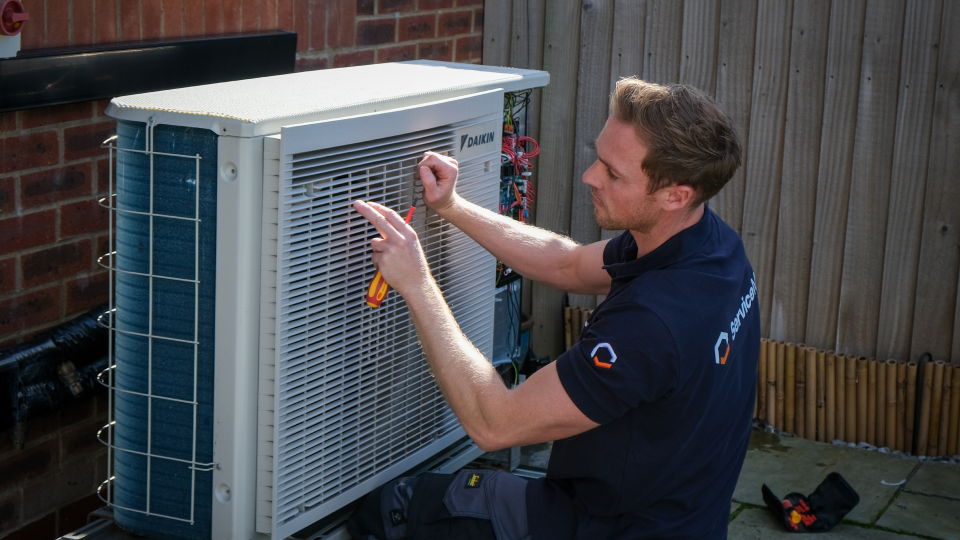
What are the Signs of an Inefficient Heat Pump
Being aware of the potential signs that your heat pump isn’t operating efficiently is essential. Here are some of the tell-tale signs that may indicate an issue:
- You notice your electricity bills are suddenly rising.
- Unexpected noise starts coming from your heat pump – these could include grinding, rattling, or buzzing noises.
- The temperature is inconsistent throughout your home.
Causes of Heat Pump Inefficiency
There can be a host of reasons that a heat pump isn’t operating as efficiently as it should. Some of the main reasons that a heat pump may not be performing at its best include the following:
- The heat parameters set for the heat pump don’t correctly match the requirements of your property.
- The radiators installed at your home are either too large or too small to match the needs of your heat pump. When the radiators are not the correct size, this can lead to the heat pump using more power than should be required to heat your home, or heat loss.
- Hot water temperatures are set to the wrong levels, and water flow is set too high or low. Both of these factors can cause heat pump inefficiency and higher bills.
- Insufficient insulation in your home can also impact efficiency of your heat pump and prevent it from working to its full potential.
Importance of Checking Heat Pump Efficiency Between Services
Booking in for regular heat pump servicing is vital to ensure your heat pump is safe to use and running as it should. However, it’s still vital to be aware that issues can occur between your heat pump service times, without you even being aware of them.
Checking your heat pump between scheduled maintenance services can help to:
- Ensure you get a better return on your investment by maximising the energy efficiency of your heat pump.
- Provide heat pump troubleshooting to detect potential causes of your heat pump not working as well as it should.
- Extend the longevity of your heat pump by getting potential issues resolved quickly.
- Keep your home at a comfortable temperature much more easily.
Unfortunately, the longer that heat pump issues go on without detection, the more likely they are to cause further drops in efficiency and the more problematic they will be to resolve. So, it’s helpful to take an extra step to ensure your heat pump remains efficient between services by getting a heat pump performance report.
How Heat Pump Performance Reports Boost Efficiency
A professional heat pump performance report provides a deep dive assessment into the efficiency and overall performance of your heat pump.
The results of your completed heat pump performance report will clearly show the following:
- Whether your current heat pump setup is operating efficiently.
- Detailed information on your heat pump’s current performance.
- Advice on how to use your heat pump in the most energy-efficient way possible.
- Important information on how to maximise the performance of your heat pump.
- Any potential issues with the heat pump and its performance will be identified.
- Guidance on adjustments you can make at home to improve your heat pump’s performance.
Key Metrics to Measure Heat Pump Efficiency and Performance
A heat pump performance report needs to provide you with clear results, and a better understanding of your heat pump’s current efficiency and performance and how it can be improved. Your heat pump performance report will contain key metrics that clearly illustrate your heat pump’s efficiency and performance. These metrics are known as COP and SCOP. Below, we break down each of these to explain what they measure and why they’re useful:
Coefficient of Performance (COP)
As it’s name suggests, Coefficient of Performance aka COP, measures how efficient your heat pump is at converting energy (electricity) into heat. A COP of 3 or 4 is generally considered to be efficient. If your heat pump performance report tells you that your heat pump has a COP of three, this means that for every one kilowatt of energy used, your heat pump generates three kilowatts of heat.
Seasonal Coefficient of Performance (SCOP)
Another term you will see on your heat pump’s performance report is Seasonal Coefficient of Performance, aka SCOP. Your heat pump’s SCOP shows your heat pump’s efficiency throughout the entire year. Rather than being a snapshop of efficiency and performance, SCOP is calculated by taking your heat pump’s total heat output for the year, and then divides it by the amount of electricity it used throughout the year. Calculating efficiency in this way takes fluctuations in use and temperature throughout the year into account.
Heat Pump Servicing: How Often Is It Required?
As a general rule, it’s advised to make a heat pump servicing appointment once every twelve months. That should be enough to keep your warranty in check and to keep the heat pump in full working condition, though it’s also recommended to get in touch with a heat pump troubleshooting professional if you run into any issues that require immediate attention.
Be proactive
Taking a proactive approach to managing your heat pump’s efficiency can help to boost its lifespan, reduce any wear and tear, and lower your energy bills. Rather than waiting for your annual heat pump service, an air source heat pump performance report will help you to ensure you maximise the benefits of your heat pump all year.