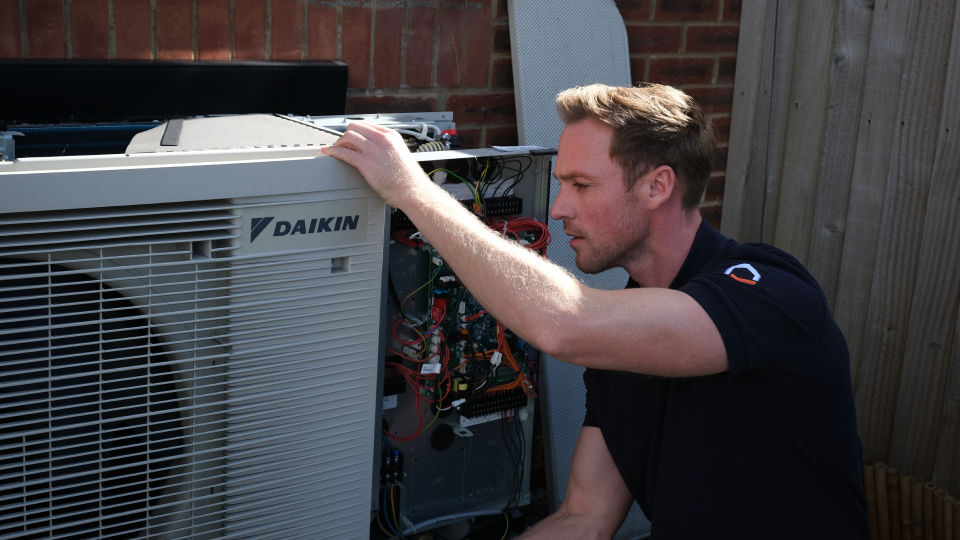
Air source pumps are fantastic pieces of kit, and they’re becoming more and more popular in the UK. You might have gotten one because you were sold on promises of environmentally friendly and efficient heating, which, in the winter, is a lifesaver. But then you look at your utility bills, and things might not be as cheap as you expected.
While this seems bad, it’s not necessarily a permanent problem. Your air heat source pump can still save you money with heating; you just might need to tweak a few things.
Typical Air Source Pump Costs and Savings
Air source pumps have two main advantages. First, they’re more environmentally friendly. Instead of burning fossil fuels like gas or oil, they run on electricity and work by using naturally occurring heat from the air outside. If you use solar panels to power your home, you’re even using clean electricity, and you’re one step closer to a completely green house.
The second advantage is a bit less magnanimous and a bit more interesting for the average homeowner. You can potentially save money each year while still heating your home. But this is also where things can go wrong.
How much does an air source heat pump cost to install?
Much like any heating system, there isn’t a one-size-fits-all estimate for the cost. Someone living in a mansion is going to need a larger and more expensive system than someone living in a one-bed bungalow.
You also need to consider your existing heating system and how difficult it might be to convert it to a heat pump.
If you want an average number, look at a cost of about £11,000 for getting an air source heat pump. Or, if you want something a bit more precise, try using this heat pump cost estimator that actually takes your home details into consideration.
This is more expensive than it would be to just replace your normal boiler, but over time, a heat pump can save you money.
How much can you save?
Most people get an air source pump to save money. The amount you can save depends on what heating system you had before. Here’s what you can expect to save annually, so if you’re spending more on your utilities, you might have a problem.
- G-rated boilers: £65 for oil boilers, £260 for gas boilers, and £700 for LPG boilers
- A-rated boilers: £270 for LPG boilers, and you might actually lose money compared to A-rated oil and gas boilers.
- Electric storage heaters: between £700 and £1200, depending on the age of the system you replace
- Coal: around £700
There’s nothing more annoying than installing a system that’s meant to save you money, and then you still end up paying through the nose for your heating. Here are some potential reasons why your air source pump might not be as cheap as it should be, as well as how to sort it out and enjoy the inexpensive heating you expect.
Treating Your Heat Pump Like a Boiler
Boilers have been the standard heating option for British homes for decades, so it makes sense that you default to treating your heating system the same way.
Unfortunately, this often leads to inflated bills. Your air source heat pump isn’t a boiler. Trying to use it like a boiler is expensive. Installing a heat pump like a boiler is another mistake, because you’re left with controls designed for boiler systems.
Heat pumps are very efficient when they’re allowed to run for long periods of time, while boilers can be switched on and off as you need them. So don’t worry about your heat pump constantly running; it’s working as intended. If your system is starting and stopping, it’s probably not working as efficiently as it should.
Once your heat pump gets the temperature of your home to a comfortable level, it can keep it there very efficiently.
Weather Compensation Gone Wrong
It stands to reason that, when it gets colder over the winter, your heating system will work harder to keep your house warm. Heat pumps are designed with weather compensation, which basically means they will automatically increase the flow rate as the temperature drops, meaning that your home stays nice and toasty.
This is great, right?
Well, kind of. If the weather compensation curve is set too aggressively, you end up with an air-source heat pump that is running hotter than it needs to. This is less efficient, less expensive, and while your home is warm, it stresses the system unnecessarily.
Make sure the weather compensation curve is set properly so you’re still comfortable, but without an inflated flow.
Installation Issues
If your heat pump isn’t installed properly, it won’t work as efficiently as it should. Common offenders include:
- Poorly balanced circuits
- Undersized pipework
- Emitters designed for boilers
Regular heat pump servicing will reveal this problem, and you can then get it repaired to save you money in the long run.
Maintaining Your Air Source Heat Pump
One of the most important ways to make sure that your air source pump isn’t costing too much money is to get it regularly maintained. This will keep it more efficient, and it makes sure your system doesn’t break down. Nobody wants a heating system that doesn’t work during winter, when you need it the most.
ServiceMy offers a free service reminder so you never forget to get your air source heat pump serviced. This way, it won’t break down and need emergency repairs.
Heat Pump Tariffs
Another way to save money is to look into heat pump tariffs. Depending on your electricity provider, you might be able to get tariffs on your electricity. This keeps your utility costs down.
Make sure to compare the costs of the tariffs, especially when you’re looking at peak times, because energy costs can really differ between electricity providers at certain times. You’ll also need to get a smart meter to benefit from these tariffs.