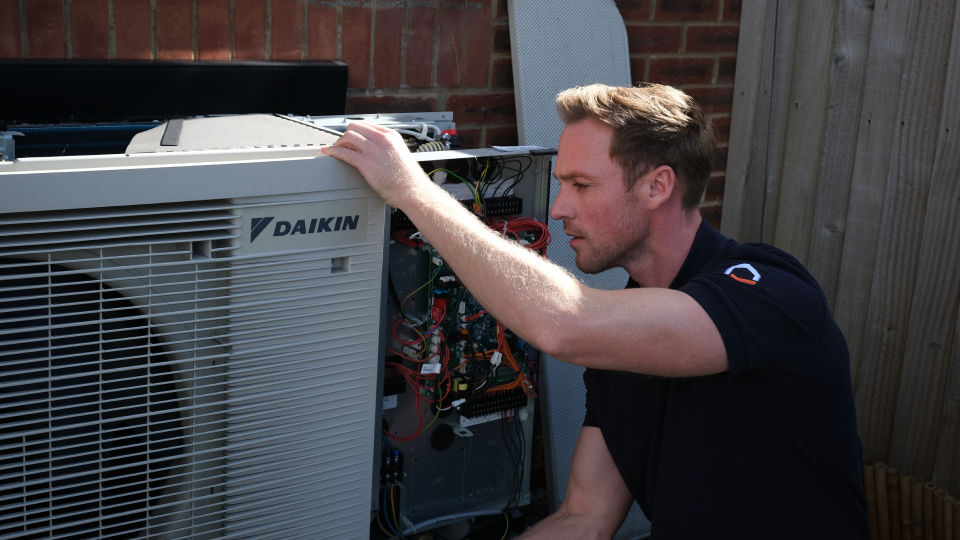
Imagine the following scenario: You are a UK homeowner who has installed a heat pump a few years ago and you are looking forward to enjoying the heating that it produces this winter.

But a couple of weeks into December, you discover that it isn’t working the way you expected. It won’t produce the heat you want.
Scenarios like this are why it is so critical to regularly maintain your air source heat pump. If you don’t, it won’t remain reliable during bitter British winters, leading to lower efficiency and more potential breakdowns in the future.
In this article, we look at what air source heat pumps are and why maintenance matters, especially during the winter. We explore what servicing involves and UK regulations that you need to be aware of if you own one of these systems.
What Are Air Source Heat Pumps?
First, what are air source heat pumps?
Air source heat pumps (ASHPs) are environmentally friendly systems that extract energy from the air outside and convert it into heating in the home. This technology applies even when the actual air temperature outside is cold.
You can think of air source heat pumps as reverse refrigerators, removing energy from the air and transferring that into heating for rooms and hot water tanks.
The UK is one of the best countries to use air source heat pumps. Systems can work down to temperatures of -15°C, but to perform well, they need regular maintenance and upkeep. The most common type in Britain right now is the Monobloc, which involves installing a single outdoor unit.
However, you can get split systems with some components indoors and some outside.
Air source heat pumps provide owners with numerous benefits, including:
- Higher performance ratings overall
- Less energy usage
- Reduction in CO2 emissions
These systems are also reliable in UK weather, provided that they receive proper maintenance.
Why Is Annual Maintenance Critical For Air Source Heat Pumps?
Annual air source heat pump servicing is essential for numerous reasons. The main motivation is to prevent minor faults from escalating into serious system-wide failures that cost thousands of pounds to resolve.
Air source heat pumps are not cheap to install, even with government incentives, meaning that it is critical to keep them operating in good condition for a high return on investment.
Another reason for annual maintenance is to ensure systems operate at peak efficiency. The heat output of air source heat pumps is generally lower than for conventional gas-fired boilers, and so any additional efficiency helps with reducing energy costs while improving the experience of home occupiers.
If you don’t perform annual checks, then you can run into problems, including the following:
- Fan failures
- Corroded or damaged coils
- Degraded refrigerants
If you don’t deal with these issues quickly, they will often lead to breakdowns, which are more common in the winter when weather conditions are harsher. And to make the situation worse, you may have to wait longer for servicing professionals to arrive because demand for their services is higher during the winter.
Proper maintenance and keeping your system clean and well-calibrated can reduce energy costs 10-20% compared to non-maintained systems. These savings can be quite significant in a country like the UK, where prices are liable to spike during the winter months.
What’s more, if you look after your ASHP well, you can extend its lifespan significantly. Many systems are rated to last for between 10 and 15 years, but you may be able to push yours out to 25 or 30 years if you prevent essential components from degrading.
Manufacturers will often provide you with guidelines on how to maintain and service your system optimally to ensure that it continues to perform for the remainder of its life.
Lastly, getting regular maintenance for your ASHP can improve safety. You are less likely to experience:
- Toxic refrigerant leaks
- Electrical faults that increase the risk of electrocution
Winter-Specific Challenges For Air Source Heat Pumps In The UK
Winter-specific challenges for air source heat pumps in the UK are fairly minimal because the weather often remains mild year-round, especially in the south. However, problems can occur if there is frequent frost or temperatures drop below 5°C.
If you are experiencing extreme weather, make sure your system is able to trigger its defrost cycle. Most ASHPs have this functionality to enable them to manage cold weather better.
When the weather is especially cold, dirty coils can be a problem. Ice particles can freeze and lead to damage to the coils that make heat extraction more challenging. If this occurs, you are more likely to need backup electric heating instead of solely using your ASHP.
If you have a lot of leaves in your garden, clean them up from the area around your heat pump since they can block air flow and make erosion more likely. During extreme weather, check compressors and fans as these components have to work harder when temperatures drop lower.
Annual Maintenance Checklist
The following is an annual maintenance checklist for the average air source heat pump in the UK. Use a certified engineer with F-Gas qualifications to the following:
- Perform a thorough inspection checking all of the components for damage.
- Clean the filters to maintain airflow.
- Provide a visual inspection of coils to see if replacement is necessary.
- Perform cleaning of internal components if dirt has entered the system.
- Make sure the refrigerant levels are optimal and there are no leaks.
- Check any sensors and connectors on the unit, particularly for split systems.
Now You Know Why Annual Air Source Heat Pump Servicing Is Essential
Reading this article, you should now better understand why ASHP servicing is critical, particularly in the winter. It can help you save money and prevent safety issues while keeping your home warm. While the UK has predictable winters, it is still vital that a professional inspects your heat pump annually for optimum long-term performance and reliability.