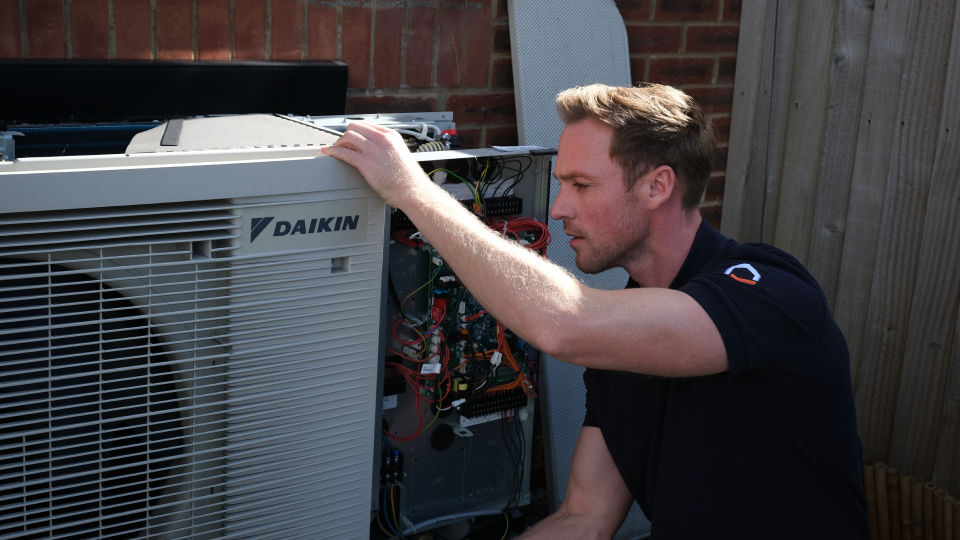
The short answer to this question is, yes. A hybrid system has two different heating systems living and operating under the same roof.
While a standard Air Source Heat Pump (ASHP) is a single solution, a hybrid is a collaboration involving both a heat pump and either a gas or oil boiler. This means that any service needs to handle both. So, let’s explore how this service differs and why this is important.

The Controls
One of the reasons the service is different is due to the controls. With a typical air source heat pump setup, the controls are more or less straightforward. When the thermostat requires heat, the heat pump turns on.
In a hybrid system, things are a little different. There’s a control interface that acts as the brain of the operations. This is constantly calculating the bivalent point – this is the outdoor temperature where it becomes cheaper or more efficient to switch from the heat pump over to the boiler.
This is part of the service. During the service, the engineer needs to check that the temperature sensors outside and the flow sensors are calibrated correctly. If the outdoor sensor is off by even just a few degrees, then the system might stay on the boiler setting for too long.
Or, it could run the heat pump in conditions where it is frosting up. By testing the “hand-over” logic engineers can make sure that everything is running smoothly and save you a fortune in either energy bills or repairs.
Hydronic Integration
Hybrid systems will typically share the same “wet” circuit. This is the water in your radiators but the way they both interact with this water is totally different.
Most hybrid systems will use a heat exchanger to transfer the heat from the refrigerant circuit through to the central heating water. During a service, the engineer will check for both sludge or limescale build up. As heat pumps operate at lower flow rates than boilers they are more sensitive to “debris” in the water.
Many hybrid systems also use an “antifreeze” in the outdoor loop to prevent burst pipes during a power cut through the colder winter months.
This antifreeze can become acidic over time and cause corrosion inside the boiler. That’s why during a hybrid service, an engineer will use a tool called a “refractometer” to check the level of the anti-freeze as well as the pH level to ensure that it isn’t eating away at your boiler. A standard boiler service won’t typically include this check but it is critical for hybrid systems.
Outdoor Unit Checks
Why the boiler itself sits inside the property, the ASHP unit is outside. As such it is exposed to the elements and it’s another area that needs to be inspected. This includes evaporator cleaning.
The “fins” on the back of the unit act like a vacuum cleaner, sucking up any dust and leaves. If these are blocked, the system becomes far less efficient overall.
Heat pumps also produce a large amount of water when they defrost. The engineer needs to ensure that the drainage path remains clear so water doesn’t pool underneath the unit.
Indoor Maintenance
This is the part of the service that those with a standard heat pump won’t have to worry about. The boiler requires a traditional combustion service. This includes:
Burner inspection – This checks that the flame is burning cleanly and injectors aren’t blocked
Fluid gas analysis – This involves using a probe to measure CO and CO2 levels, ensuring that the boiler is both safe and efficient.
Seal replacement – Seals degrade overtime due to the high heat of the combustion.
Who Can Complete A Service On A Hybrid Heat Pump System?
To complete a service on a standard ASHP, you need an engineer with an F-Gas Certification as well as someone who has a comprehensive understanding of low-temperature hydronics.
On the other hand, for a hybrid system, you will need help from an engineer who is dual qualified. They still need to be F-gas certified but they also need to be gas safe or OFTEC registered for the boiler side of the system.
Why does this matter?
If you hire a standard heat pump engineer and they are not gas safe, then they won’t be able to open the boiler to inspect the burner. Furthermore, a traditional gas engineer won’t have the knowledge or tools to check the evaporator coil or the refrigerant pressures on the outdoor unit.
This is why services for hybrid systems are often longer and more expensive because you’re paying someone who has two particular skill sets.
How Vulnerable Is A Hybrid System?
A common misconception is that hybrid systems are safer or more reliable because if one area fails then the other continues to run smoothly. In reality, the two systems mean that air source heat pump servicing is far more critical.
If the element that directs water between the boiler and the heat pump gets stuck because of low levels of maintenance or debris in the system, it can stop both systems from heating your home.
A service engineer will check these diverter valves are operating correctly. This task is always more complex in a hybrid system because the valve will choose between two different heat sources.
How Often Do You Need To Service A Hybrid System
It is recommended that you service a hybrid system biannually or annually. This is the same as a standard heat system. The difference is the warranty. Extended warranties are common with hybrid systems with some extending to up to 10 years.
That said these warranties are often conditional and require you to service both the “F-gas” and the “gas” components on an annual basis. If you service one regularly and ignore the other for four years, you could be looking at an expensive repair.
Get In Touch With Our Team Today To Arrange A Service Or Repair
As you can see, there are key differences when air source heat pump servicing a hybrid pump system. The good news? At ServiceMy.co.uk we can provide the expert hybrid servicing you require to keep your heating system running smoothly for years.
Contact our experts today for more information.