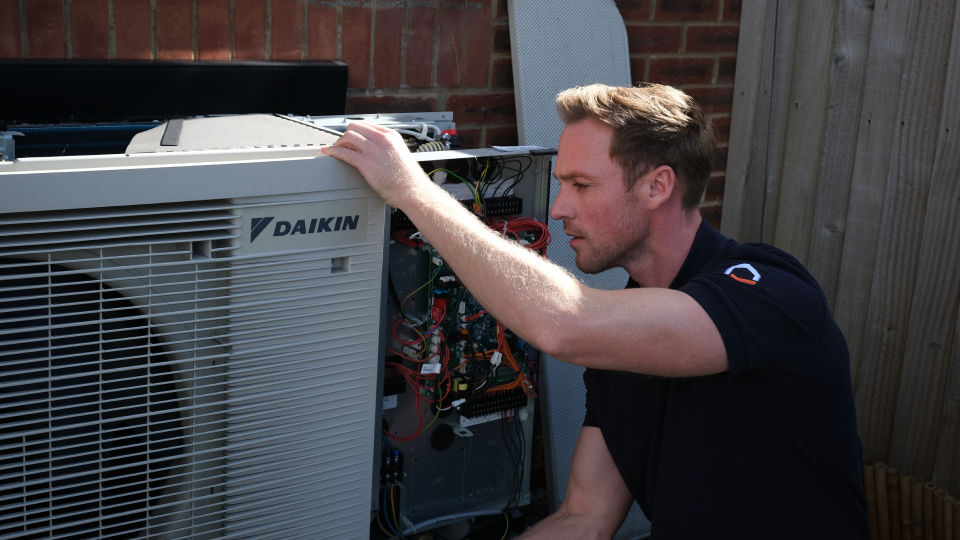
Air source heat pumps aren’t anything new in the UK, but they are increasing in popularity for multiple reasons. In fact, recent dates indicate that over 220,000 air source heat pumps have been installed in the UK thus far, and this figure shows the UK is well on its way to meeting the government’s aim to have 600,000 installations per year by 2028.
But as the air source heat pump is still relatively new to consumers and homeowners, knowing how best to use it means you get the most from your investment and keep your home comfortable all year round.
This post is going to look at some effective air source heat pump thermostats and control strategies for UK homes.
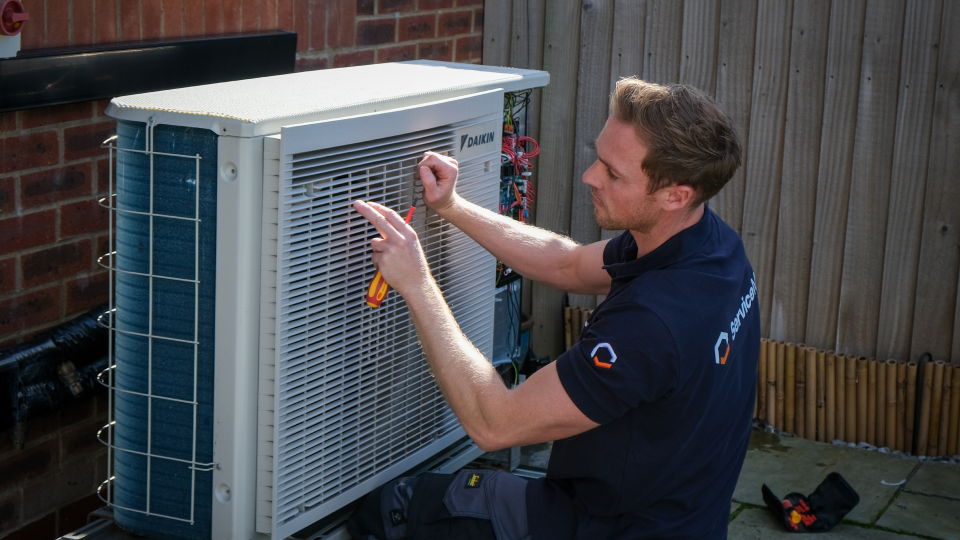
What Exactly Does an Air Source Heat Pump Do?
Before you understand how best to control your air source heat pump, you really need to know how it works. Essentially, it works by extracting heat from the outside air. This heat is then transferred into your home’s heating system.
And even in colder weather, it’s still possible to extract heat energy from the air. The system does not generate warmth through combustion like a traditional boiler does.
The process relies on a refrigeration cycle. The system has a specific refrigerant that absorbs heat from external air. It evaporates into a gas, which is then compressed to raise its temperature. From here, the heated refrigerant transfers energy into the home’s heating circuit. The result is warm water that feeds radiators, underfloor heating or hot water systems.
It’s important to know that air source heat pumps operate best at lower flow temperatures over longer run periods. This means how you use them varies dramatically from traditional heating systems people are used to.
Why Heat Pump Heating Feels Different
The difference between traditional heating systems, i.e. a boiler, and heat pumps is in how the technology behind them is designed to operate. Boilers, by design, are there to create short bursts of high-temperature heat.
Air source heat pumps, on the other hand, are designed for a longer period. This means your radiators might feel warm, not hot, as the room tends to heat more gradually. There’s no noticeable “heating cycles” with the heat pump, rather it’s a more consistent background warmth you’ll experience.
And this steady operation is intentional. Heat pumps will achieve stronger efficiency when avoiding frequent start-stop behaviour.
As a result, when you take out the aggressive temperature swings and rapid heating and cooling from the equation, you get more even heating, less intense radiator heat and longer runs. This is why it’s imperative to understand how to use the system correctly.
Best Thermostat Strategies for Heat Pump Homes
The aim for controlling an air source heat pump here is stability. They work best when maintaining a consistent indoor environment.
For most UK homes, effective heat pump thermostat use looks like:
• Keeping thermostat changes minimal — frequent adjustments of several degrees force the system into inefficient recovery cycles
• Avoiding large overnight setbacks — reducing room temperature even by 4–6°C might feel like you’re saving energy, but you’ll often increase morning demand
• Using gentle setbacks if needed — a reduction of 1–2°C is typically easier for the system to recover from
• Maintaining consistent daytime settings rather than repeatedly turning everything on and then off again
• Allowing longer run times instead of expecting rapid bursts of heat
• Accepting radiators may feel warm, not hot
The aim with these choices is to maintain comfort gradually and continuously, as sudden temperature swings or “boosting” the thermostat rarely speed up heating but can reduce efficiency and increase system strain.
Common Control Mistakes to Avoid
Even with a good strategy, it’s really important to understand mistakes that people make, especially as they get used to a new system, as certain actions and behaviours can reduce heat pump efficiency and overall comfort.
Common mistakes to avoid include:
• Frequently adjusting the thermostat — this prevents the system from stabilising
• Turning the heat pump on and off — this disrupts steady operation, which is optimal
• Increasing flow temperatures — doing this to chase hotter radiators puts additional strain on the system
• Closing multiple zones or radiators — this disrupts the system balance
• Using boost features repeatedly — the result is forced and inefficient heating cycles
Maintenance Habits That Support Heat Pump Performance
Reading this article, you should now better understand why ASHP servicing is critical, particularly in the winter. It can help you save money and prevent safety issues while keeping your home warm. While the UK has predictable winters, it is still vital that a professional inspects your heat pump annually for optimum long-term performance and reliability.
Thermostat settings and control strategies play a major role in the efficiency of your air source heat pump. However, ongoing maintenance is equally important for protecting long term performance and getting the most from your system.
Simple preventative checks can help reduce strain on the system and maintain consistent heating behaviour.
Monthly
- • Clean or replace air filters where accessible
- • Check airflow paths and vents are unobstructed
- • Inspect the outdoor unit for leaves and debris
Quarterly
- Check for visible pipework or insulation damage
- Listen for any unusual noises
Annually
- Schedule professional air source heat pump servicing
- Verify refrigerant levels, sensors and electrical connections
- Check system pressures and performance calibrations
Seasonal
- Before winter, check that defrost cycles operate correctly
- • During warmer months, monitor for unusual cycling or inefficiency
Well-maintained systems perform better, operate smoothly and respond correctly to controls and strategies, helping to avoid efficiency loss over time.
How Air Source Heat Pump Servicing and Control Strategies Affect Performance
Air source heat pumps have a potential lifespan of up to 20 years. This means ensuring you get annual servicing is a vital part of your control strategy.
General use of your heat pump and how you control it impacts more than your day-to-day comfort. Incorrect settings, unstable temperature demands, and frequent cycling patterns all impact how efficiently an air source heat pump operates over its lifetime.
Professional heat pump servicing includes reviewing system controls, checking calibration and identifying configuration issues that impact efficiency. Neglecting annual servicing can potentially cost you thousands in repairs over the years if important adjustments or early issues are missed.
These preventative checks ensure your system is operating within its intended performance range.
Air source heat pump servicing is one of the best ways to ensure your system is working correctly and that you understand the condition it is in. Having trained professionals inspect your heat pump, identify inefficiencies and ensure your controls and settings are supporting performance rather than reducing it.