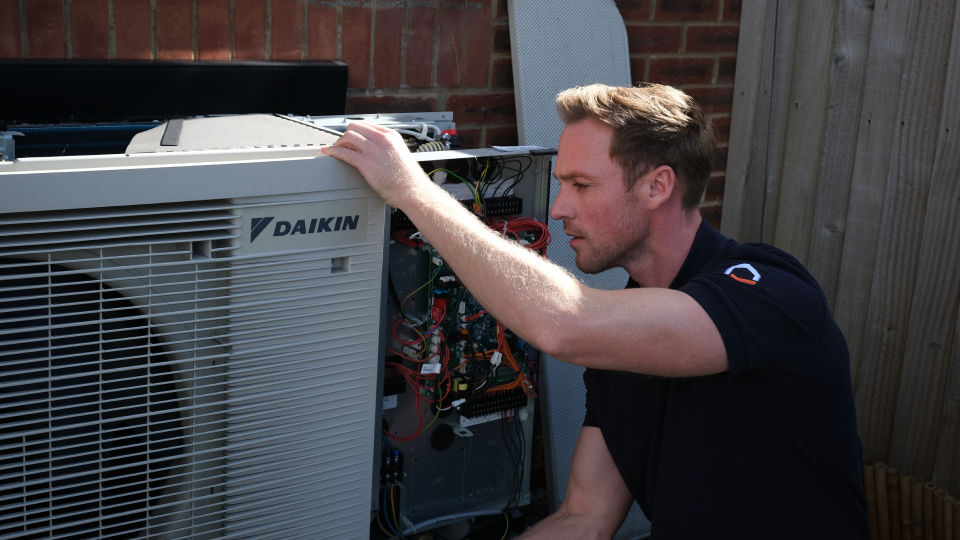



Your air source heat pump does a lot of heavy lifting for you over winter. It’s a season that’s marked by consistently cold temperatures, extended running times, frequent defrost cycles, and peak heating demands – all of which can put pressure on your heat pump and its components. That means after the immediate stress of winter, spring is a great time to get started on some post-winter checks.
In fact, even if you’re getting your system inspected throughout the year, an ASHP post-winter check is one of the single most important annual checks your heat pump needs, especially if you’ve noticed some indications that it might not be running as well as it should be.
That’s exactly where we can help here at ServiceMy. We offer a wide range of services, from repairs and maintenance to remote monitoring, all designed to help ensure your system is always working to its maximum capacity. And of course, we’re always on hand to answer any questions you have about the process at large. On that note, if you’re looking to understand a bit more about the process, or you’ve got reason to think you might have an issue with your air source heat pump, here’s a quick guide with everything you need to know to get you started.
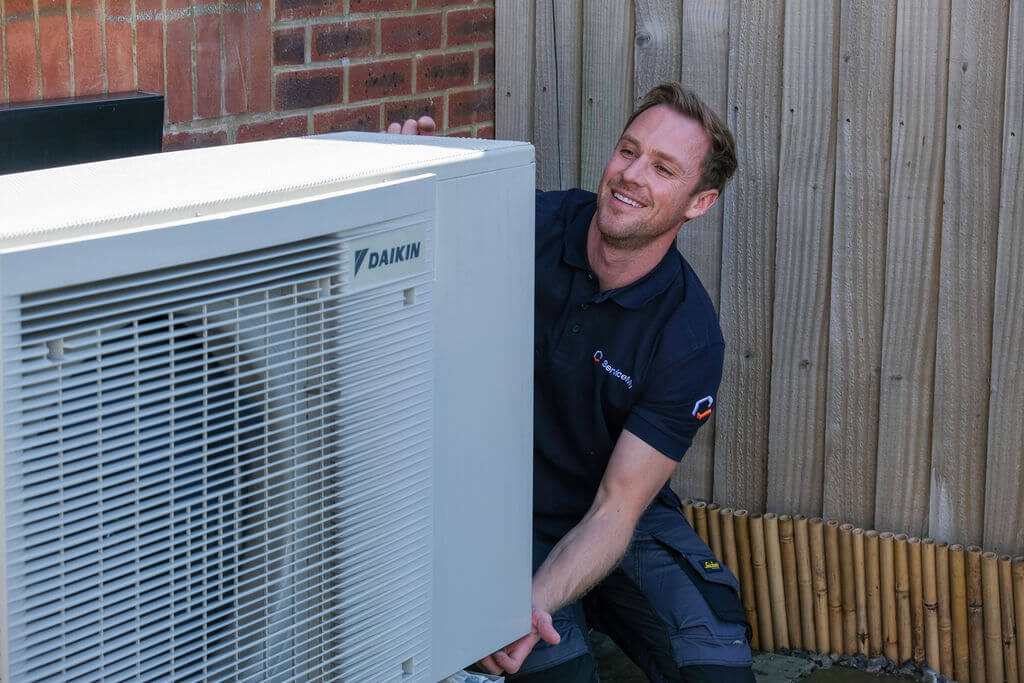
What your heat pump goes through in winter
It’s relatively rare to see snowfall in the UK, but temperatures in the depths of winter can still drop well below freezing. And while air source heat pumps are of course built to handle the strain, they still have to endure quite a lot over a significant chunk of the calendar year. Some of the biggest factors include:
Extended run times
Your ASHP will have been running more or less constantly to keep you and your family warm over the winter, especially during a cold snap. This is normal, but puts a lot of pressure on a few crucial components, including the compressor, refrigerant circuit, and fan motor.
Repeated defrost cycles
Frost obviously tends to form more during winter than any other point of year, and it often accumulates on the outdoor heat exchanger coil. The system periodically enters a defrost cycle to clear this, which puts gradually more pressure on key components.
Higher operating demand
Since an air source heat pump essentially works by drawing warmth in from the outside air, this means that the colder the air is outside, the harder it has to work. While they’re designed for efficiency and reliability, you still may spot that it has a higher operating demand in the coldest months of the year.
Dead leaves and other debris
As your heat pump is fitted to the outside of your home, it can often be exposed to the characteristic winter combination of high winds and dead plant matter. Dead leaves, dirt, ice residue, and general debris can all start building up around it unless they’re regularly cleared. This can eventually start to restrict airflow through the heat exchanger coil, and have a direct impact on its efficiency.
So what happens if your heat pump isn’t checked after winter?
Lots of people skip post-winter checks under the operating assumption that as long as their heat pump is still working, they might as well save themselves the job. But as with so many other types of preventative maintenance, skipping it can actually be more expensive and disruptive in the long run, which is the main reason why regular air source heat pump servicing is so important. Some of the biggest issues can include (but are not limited to) the below.
Higher bills
Poorly-maintained heat pumps with reduced airflow and worn components will run less efficiently, which means they take longer to achieve the same temperatures. That increases their energy consumption and makes them more expensive to run, especially over extended periods of time.
Costly major faults
The harsher conditions of winter can put your heat pump under particular strain, so this is the most frequent time for minor faults to develop. If they’re not identified and resolved quickly, small issues can sometimes evolve into more serious problems, which can then require more in-depth (and potentially expensive) repairs.
Compliance failures
Most manufacturers require your heat pump to be annually serviced to keep your warranty valid. If you miss an air source heat pump service, that can put your system outside of its warranty terms, and affect its compliance with key regulations and standards, such as:
- MCS requirements – the Microgeneration Certification Scheme sets standards for the installation and performance of small-scale renewable energy systems, including air source heat pumps
- Building Regulations Part L – mandatory regulations that set energy efficiency requirements for heating systems in domestic properties.
- F-Gas Regulations – these set standards for controlling the handling, maintenance, and leak prevention of refrigerants used within heat pumps.
Health risks
Poor airflow and neglected components can potentially allow dirt, mould or bacteria to build up within your heat pump. This can have a significant impact on the indoor air quality within your home, and potentially expose you and your family to dangerous infections like Legionnaires’ disease.
These are some of the most universal implications of a poorly-running heat pump, but it’s not a comprehensive list. If you have any specific concerns, you can always ask one of our team here at ServiceMy – we’ll always be happy to answer questions in as much or as little detail as you need.
Schedule Your Heat Pump Service Today
Get in touch with our friendly HVAC engineers at ServiceMy to keep your heat pump working at full capacity, keeping your home cost, energy-efficient and cost-effective all year round.
Why is Spring the best time to check your heat pump?
There’s a number of reasons why Spring is the best time to have your heat pump inspected. It’s the natural stopgap between the intensive winter months, and the next heating season. That makes it a great opportunity to quickly get on top of any strain that winter may have caused your ASHP, repairing any faults and maintaining its general efficiency and overall operational lifespan.
The relatively mild weather of spring and summer also helps in a few further ways too. For example, you can have peace of mind that your heat pump’s crucial components will stay in good condition throughout the warmer months, as there’s less pressure on them. Plus, any parts that do need replacing after winter can be sourced relatively easily, and without any worries about your heat pump being less effective (or even inoperable) in the meantime. In fact, the low heating demand of spring and summer means that there’s fewer consequences for any system downtime, as opposed to the chillier consequences that this would cause during autumn or winter.
It’s also worth noting that lots of air source heat pumps also provide air conditioning in the warmer months, so if you have yours serviced promptly, it may be another benefit you can enjoy throughout spring and summer.
In summary, your air source heat pump will run more efficiently during a stable and low-demand period, so getting it serviced in Spring is easier, less intensive, and generally cheaper in the long run. And of course, you can count on it to stay reliable for the next time you really need it when autumn rolls around.
How much does it cost for heat pump servicing in the UK?
Depending on the size and condition of your heat pump, the cost for a service can range from anywhere between £120 to £200 for a standard domestic air source heat pump. The cost is often easily outweighed by the savings you can make on it running efficiently in the long term. The job itself is quite quick too – it typically only takes between one and two hours.
4 key warning signs to look out for
It’s never a bad idea to arrange for an ASHP post-winter check even if there aren’t any noticeable issues with your heat pump. If you’ve spotted any of the following symptoms though, we’d always advise making it a particular priority to get yours checked.
Your energy bills are noticeably higher
If there’s been a spike in your bills, but no change in your usage patterns or tariff, then it’s likely that your heat pump is running less efficiently for some reason. That could be due to any number of factors, including a dirty coil, low refrigerant, or other degraded components – all of which will be reviewed and resolved during a routine service.
The system is running for longer than it used to
This is often one of the earliest noticeable symptoms If your ASHP is taking longer to reach the target temperature, then it’s probably working a lot harder than it should be, and therefore will be costing you more than it needs to.
There are unusual noises
You probably wouldn’t ignore noises from your car, so it’s a good idea not to ignore them from your heat pump. It doesn’t take any particular expertise to recognise the most worrying sounds, which can include rattling, grinding, or squealing noises. This could hint at blade damage, bearing wear, or even debris caught in the unit. The longer they go on for, the more expensive the repairs could be.
You’ve noticed ice on the outdoor unit (when it’s not defrosting)
Some level of icing during cold weather is normal, as you might expect for a fixture that’s permanently outside. If there’s still persistent icing even after temperatures have risen well above freezing though, that could indicate a refrigerant or defrost system fault.
This is just a quick roundup of some of the more common problems. If you’re not experiencing any of the above but you still have a suspicion that something may not be working as it’s supposed to, it’s generally best to act on those suspicions sooner rather than later.
What does a professional spring service involve?
A professional air source heat pump service is a highly comprehensive job, encompassing every aspect of your system and subjecting each one to a detailed assessment of its safety, efficiency, and overall working condition. Here’s a quick guide as to what that involves.
| Service Area | What does this involve? | Why is this important? |
| Outdoor unit inspection | Visual check for physical damage, corrosion, debris, and obstructions to the fan and coil | Debris and damage can restrict airflow and reduce the efficiency of the heat exchange, which is the most common cause of post-winter performance loss |
| Coil cleaning | The removal of dirt, leaf matter, and biological growth from the outdoor heat exchanger coil | A dirty coil can reduce system efficiency by 10 to 25 percent, making this one of the highest-impact maintenance tasks on any annual service |
| Refrigerant pressure check | The measurement of refrigerant pressure against the specifications laid out by the manufacturer | Low refrigerant pressure indicates a leak, so if it’s left unaddressed it can cause a loss of efficiency and potentially damage to the compressor |
| Electrical connections | Inspection and tightening of the heat pump’s electrical terminals, as well as checks for signs of arcing or wear | Loose connections can waste energy, cause overheating, and can even lead to component failure. Winter temperature cycling is a common cause |
| Compressor performance | Operational check of compressor start-up, as well as its running current, and noise profile | The compressor is the most expensive component to replace, so early detection of any wear can help to avoid a costly failure |
| Fan motor check | Inspection of fan blades for damage, bearing condition, and motor current draw | A degrading fan motor reduces airflow and forces the system to work harder, increasing its running costs and accelerating wear and tear |
| Controls and thermostat calibration | Verification that the system is responding correctly to demand signals and temperature settings | Mis-calibrated controls can cause inefficient cycling, and may explain a perceived drop in system performance |
| Pipework and insulation | Visual inspection of refrigerant pipework, lagging condition, and any signs of chafing or damage | Damaged insulation can increase the risk of heat loss and condensation, while pipework damage can indicate refrigerant loss |
| Flow and return temperatures | Measurement of flow and return water temperatures against the system’s design parameters | Incorrect flow temperatures are a common cause of inefficiency, and can indicate issues with the heat emitter circuit |
| Manufacturer service record | Completion of service logbook or digital service record | This is essential for warranty compliance, and also provides a documented history if the property is ever sold |
Book your post-winter checks with our expert team at ServiceMy
As experienced heat pump engineers here at ServiceMy, we do everything we can to make the entire process as simple and straightforward as we can for you. We specialise in servicing, maintaining and repairing air source heat pumps, including both traditional and hybrid systems. What’s more, we go beyond standard air source heat pump maintenance – drawing on our extensive in-house expertise, we can deliver comprehensive health checks and heat loss calculations, so you can always rely on us to ensure your system is operating at its very best. That means you can save money and stay comfortable all year round, while enjoying complete peace of mind about compliance and warranties.
It couldn’t be easier to arrange your own post-winter check – you can book a service directly through our website, or give us a call on 0333 050 2091. We’re here to help!