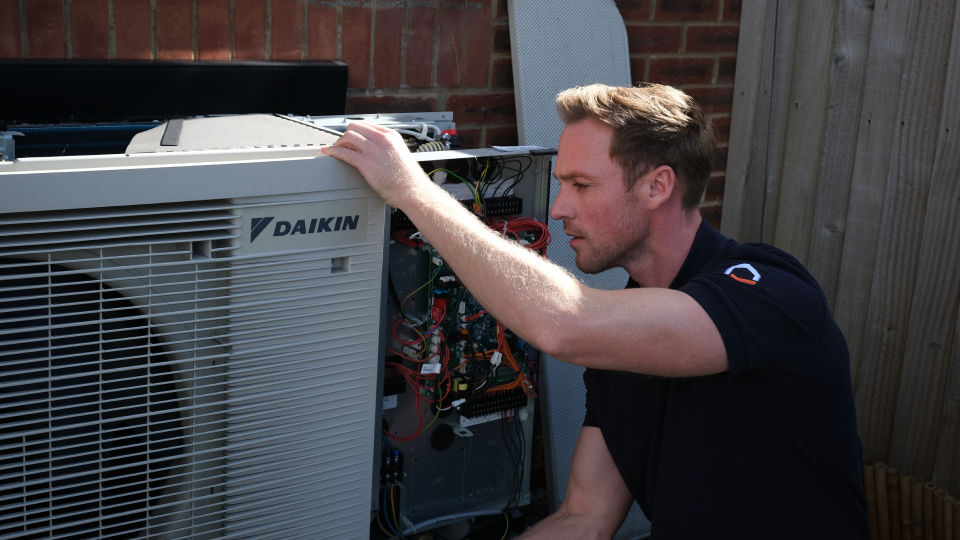



An air source heat pump is designed to deliver efficient and consistent heating throughout a property, even in cold conditions. When a system appears to be operating but the home feels cooler than expected, it is usually an indication that something is affecting either performance, heat retention, or system configuration.

Understanding what influences heat output is essential for ensuring stable comfort levels all year round.
Regular air source heat pump servicing plays an important role in maintaining output, and many of the common causes relate to routine maintenance tasks that are often overlooked.
How An Air Source Heat Pump Produces Heat
Heat pumps extract energy from the outdoor air and transfer it indoors. Rather than producing high‑temperature bursts of heat, they maintain a lower, steady flow of warmth that gradually raises the temperature of the home.
Because of this, the experience of heat delivery differs significantly from that of gas or oil boilers.
If the indoor temperature is not rising as expected, it may be due to one or several factors: insufficient heat retention within your home, reduced system efficiency, incorrect control settings, or environmental conditions. Each factor can affect performance in various ways.
System Capacity And Property Requirements
A common cause of low indoor temperatures is a mismatch between the heat pump’s output and the heating requirements of the home. If the system is too small for your home, it may operate continuously without ever reaching the set temperature.
Larger systems can also experience performance issues if they cycle on and off too frequently, which can interrupt steady heat delivery.
Evaluating the size and heating demands of your home requires assessing insulation levels, heat loss, and the design of the central heating system. An engineer can determine whether the installed system is suitable or whether adjustments are needed.
Heat Loss And Insulation Factors
Even a correctly sized heat pump can struggle to maintain warmth if the building fabric allows heat to escape. Walls, roofs, glazing, and draught points all play a role in retaining heat.
When heat loss is high, the system must work constantly to replace the lost energy, which may result in an interior that still feels cool.
Improving insulation often has a direct impact on comfort. Loft insulation, modern glazing, and addressing draughts around doors can all reduce heat escape and support stable temperatures. These measures also allow the heat pump to operate more efficiently.
The Impact Of Servicing And System Condition
Performance issues can develop when a heat pump has not been maintained routinely. Several factors may contribute to reduced heat output, including:
- Restricted airflow caused by obstructions around the unit
- Blocked or dirty filters that limit the movement of air through the system
- Coils that accumulate dirt or debris over time
- Refrigerant levels that have fallen below the required amount for efficient operation
Professional heat pump servicing addresses these issues by restoring components to optimal condition. A comprehensive service may include:
- Inspection of both indoor and outdoor units
- Cleaning of coils, filters, fans, and other key elements
- Performance and efficiency testing
- Electrical safety checks and review of control systems
- Verification that sensors and thermostats are operating correctly
When servicing is overdue, homeowners often notice slower warm‑up times or reduced heating output, which are early indicators that maintenance is required.
If your system is displaying an error code, our heat pump troubleshooting hub has brand-specific guides to help you identify the issue.
Control Settings And System Usage
Some temperature issues arise from the way the heat pump is configured rather than from a technical fault. Heat pumps function best when allowed to run steadily over longer periods, maintaining temperature rather than rapidly raising it.
Settings that work well for a traditional boiler do not always translate effectively to a heat pump.
Incorrect thermostat placement, inaccurate readings, or unsuitable temperature schedules may contribute to a cooler indoor environment. Be sure to review the control strategy for your home to improve comfort and ensure the system operates closer to its intended efficiency.
These checks can be carried out during air source heat pump servicing if needed.
The Role Of Radiators And Underfloor Heating Efficiency
Heat pumps operate most effectively with heating systems designed to run at lower temperatures over extended periods.
Traditional radiators that were originally installed for use with gas boilers may not always be well‑matched to a heat pump’s lower flow temperature. In some cases, they may be undersized, leading to rooms that feel cooler than expected even when the system is active.
Underfloor heating, by contrast, is generally well‑suited to heat pump operation due to its large surface area and lower operating temperature. However, its performance can still be impacted by insulation, floor coverings, or incorrect system configuration.
An engineer can assess whether your heating distribution system is compatible with your heat pump, and whether any changes to radiator sizing or heating controls might be required to optimise performance.
These types of assessments are often carried out during air source heat pump servicing, particularly when customers report uneven heating or unexplained temperature drops in certain areas of the property.
Outdoor Conditions And Weather‑Related Factors
During periods of very low outdoor temperatures, the heat pump may require more time to transfer sufficient heat into your home.
The defrost cycle, which activates when frost accumulates on the outdoor unit, can also temporarily reduce heating output. This is normal, but if frost builds up excessively or does not clear properly, performance can be affected.
Ensuring the outdoor unit has unrestricted airflow, is free from obstruction, and is positioned in a location that minimises exposure to thick frost can improve reliability in cold conditions. Servicing provides an opportunity to confirm that the defrost system is working correctly.
Next Steps For Improving System Performance
A heat pump that appears to be running but does not reach the expected temperature may indicate that one or more of the following areas need attention:
- Maintenance is due, and system components may require cleaning or inspection
- A performance assessment is needed to identify inefficiencies or faults
- System settings may need adjustment to match the heating requirements of the specific property
- Insulation levels throughout the home should be reviewed
- Heat loss through windows, doors, or roofs may be reducing overall efficiency
- Thermostat settings and control strategies may require correction
Each of these factors can contribute to improved indoor comfort when addressed correctly.
Routine air source heat pump servicing remains one of the most effective ways to maintain performance. Regular maintenance supports efficiency, prolongs system lifespan, and ensures that components continue to operate as intended.
ServiceMy offers comprehensive inspections designed to identify the underlying causes of reduced heat output and restore reliable operation.
For more information on servicing or to arrange an appointment, visit our website and fill in the form.
Further guidance and technical insights can be found in the ServiceMy News and Advice section.